The magazine

Awesome Magazine

Notes from the editors — on the books we are making, the ideas behind them, and what a changing era is about to ask of the people who read them.

2026.09.21

What to ask the AI, and what to decide myself

An imagined conversation about planning two free hours on a weekend afternoon. Setting the suggestions you might ask an AI for beside the criteria you have to set yourself, and asking — before the answer arrives — what actually matters. A piece about the small space worth leaving between options and choice.

00 / The same afternoon

Two voices in front of two hours

Two hours are free on a Saturday afternoon. One person jots down what they would like to do; the other picks up a phone. On a single sheet of paper, a walk, a tidy-up and a rest sit side by side. What follows is an imagined conversation, written to think through the planning of ordinary life. It is not the actual output of an AI, nor an interview.

A line on the floor of an empty corridor splitting into two directions

01 / First reactions

The one who asks for suggestions · the one who asks about criteria

A · the one who asks for suggestions

“Shall we ask the AI for a few two-hour plans? I'd like to see an option that mixes a walk with the housework and an option where we simply stay in, side by side.”

B · the one who asks about criteria

“Fine. But what counts as a good afternoon for us today? It might mean clearing the backlog, or it might mean resting with nothing in the diary at all.”

The same two hours, and yet the ending each of them wants is different. Before multiplying the options, you need room to write down today's purpose in a single sentence.

Three sheets of translucent paper laid over one another

02 / Different reasons

A quick shortlist, and the thing we don't want left out

A · the one who asks for suggestions

“Building it from nothing on my own is daunting. What I want first is a frame to compare with — a low-travel option, a stay-at-home option, that sort of thing.”

B · the one who asks about criteria

“For me it's the gaps between the entries that matter. Whether the family wants a rest, how tired we happen to be today — none of that writes itself into a timetable.”

What A wants is a starting point; what B is protecting is the reason for the choice. Neither voice has to be deleted. “I'd like to see several options” and “I'd like to rest today” can sit inside the same question.

Two stones set a little apart on a wooden surface

03 / The question in the middle

What to compare, what to check, what to decide

The part you can ask for is the sorting of possible options and an account of how they differ. The part to check is the information written into them. The part to decide is which of those differences counts for more. Whether the shortest route is today's best route is a separate choice altogether.

Generative AI can present wrong content in a confident tone of voice. NIST's risk-management guidance for generative AI sets out this risk as well. So if a plan involves opening hours or transport connections, this piece suggests checking the official information from the venue or operator separately.

It is worth distinguishing between supplying more conditions and verifying facts. Writing “keep the travel short” does not mean the details of the places in the answer have been confirmed.

Several cords laid side by side in one direction

04 / The sentence they rewrote together

Instead of “the best plan”

The two of them rewrite the question like this. “Today the aim is to rest, and we have two hours. Suggest an option that involves going out and an option that stays at home. For each, separate the pros and cons from the information we should check for ourselves.”

Once the answer comes back, they add one more line. “We're choosing this option because today rest matters to us more than getting out.” This is not a prompting technique that guarantees anything about the tool; it is an example of writing down, where you can see it, the reason behind your own choice.

Suggestions can be material for a conversation. But the seat at the table where that material is spread out and something is kept belongs to the person who has to live the day.

In the thing you want to ask an AI right now, what is the criterion you have to set for yourself first?

Source: NIST AI 600-1, §2.2 Confabulation · checked 21 September 2026
The imagined conversation and the plans are editorial examples. They are not the actual output of any particular tool.
21 September 2026 · On the Threshold of Learning 03 / 43 · Images: AI-generated
2026.09.20

Before the AI answers, the time we give a child to speak

Setting the child's own words a little ahead of our wish to hand them an answer. A letter to the grown-ups of four- to six-year-olds—on looking, listening and topping up only as much as is needed, in front of unfinished blocks and a short pencil line.

To

The grown-up sitting beside the small chair

A child lays down three blocks and says, “This is a bridge.” To adult eyes there is no way across. Picture yourself lowering, just for a moment, the hand that was reaching for a picture to show them. This is not an observed scene but an imagined bit of play, made for this letter.

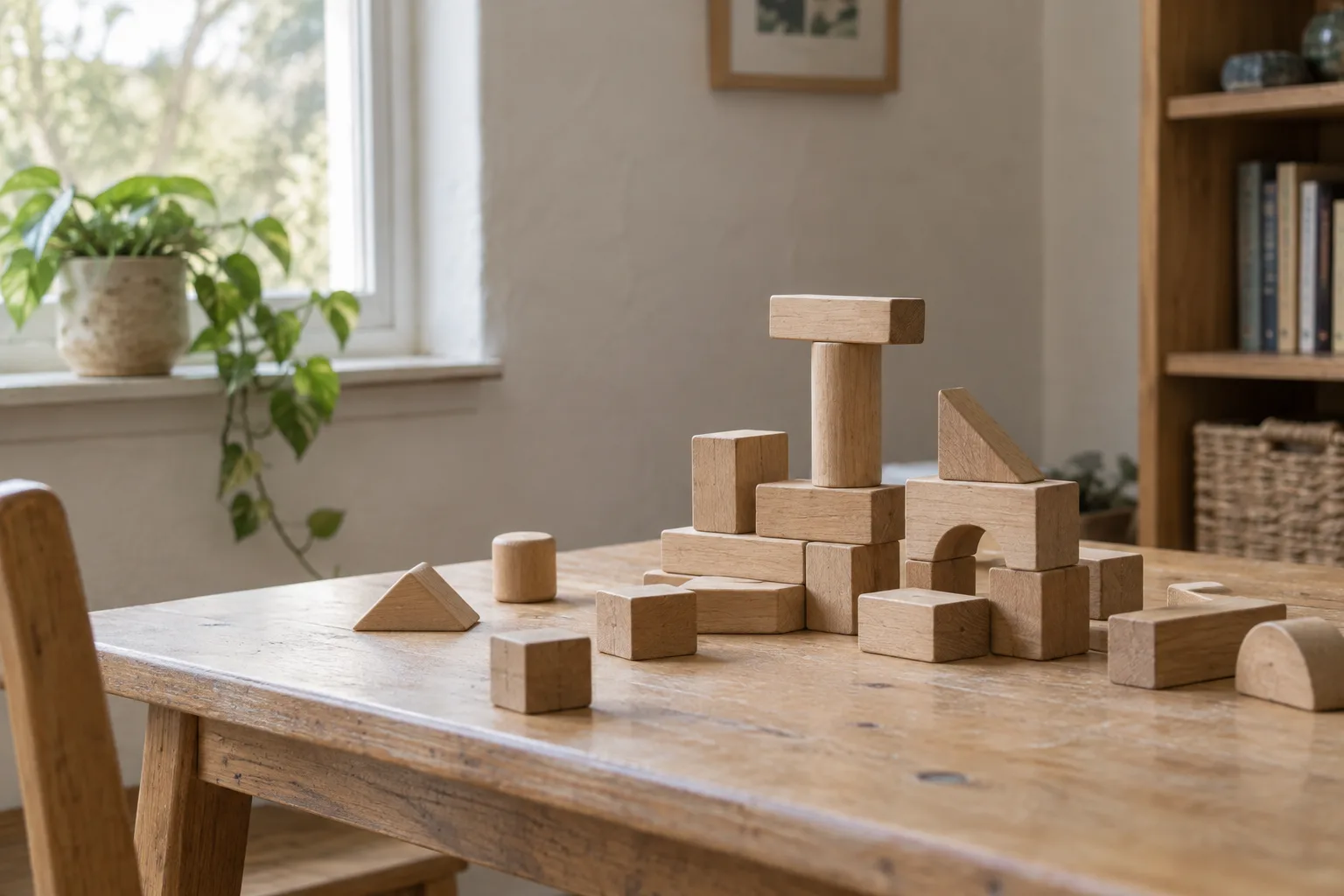
An unfinished block shape on a wooden table

02 / 05 · An unfinished block shape on a wooden table

The first pause

Before naming it, ask what they saw

“Where does it cross to from here?” If the child pats the bare floor, then the imaginary river is right there. Try checking the meaning first: “Ah, it's a path that joins these two sides.” You can keep the play's imagining separate from how a real bridge is built and still let the adult's explanation come a little later.

A short pencil line on paper

03 / 05 · A short pencil line on paper

The second pause

A line will do, if words won't come

When the words don't arrive, open another route. “Do you want to point? You can draw it, and you don't have to say anything right now.” Let's agree not to turn waiting into a rule counted in seconds, or a test to extract an answer. You can look at one line on the paper together and then move on to another game.

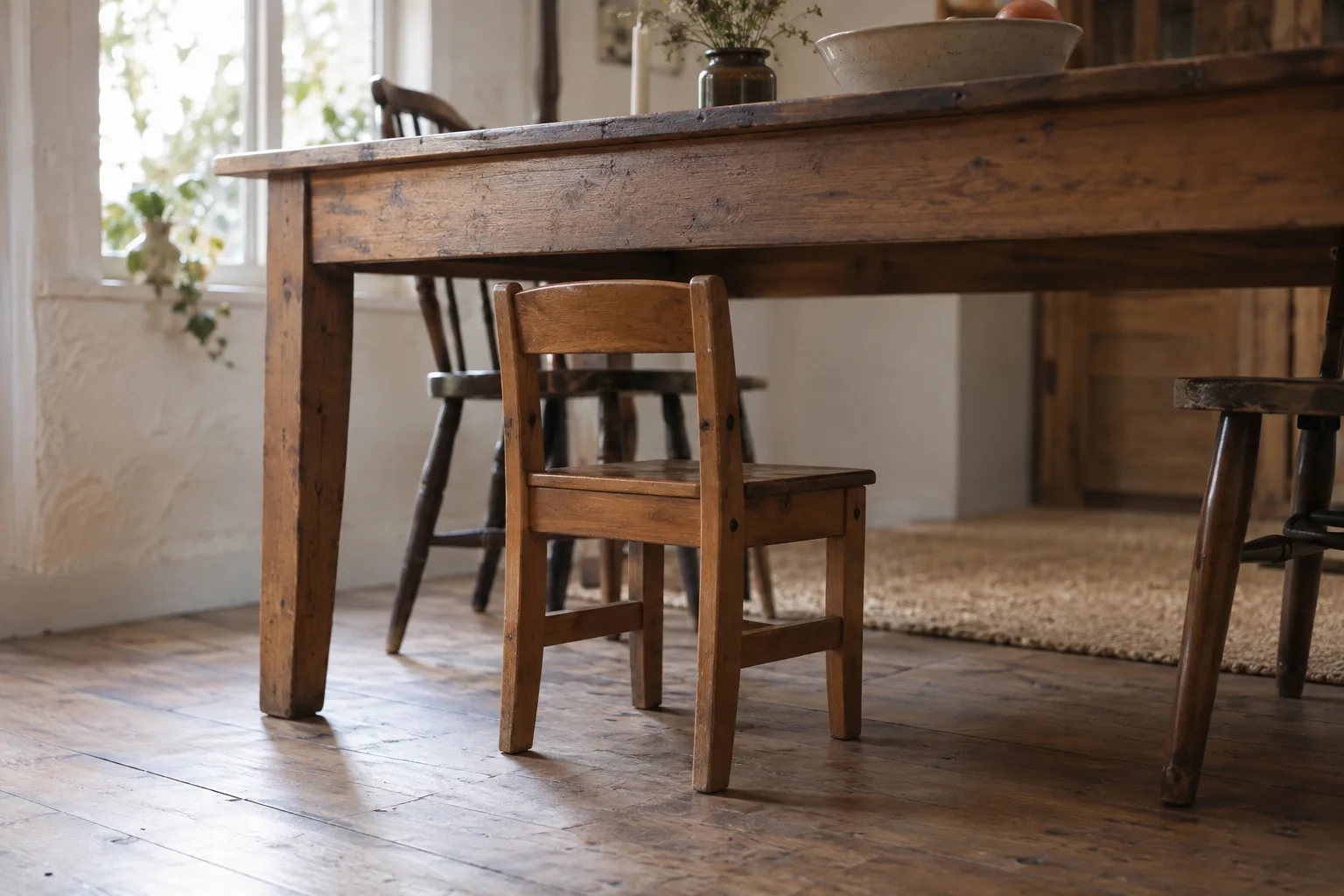
A small chair under an adult-sized table

04 / 05 · A small chair under an adult-sized table

The third pause

The hand that switches on the AI is the grown-up's

If a question is still hanging in the air, the adult goes off, looks it up and comes back. If you consult an AI, check it against a reliable source and then explain only as much as is needed. Whatever you couldn't confirm, leave it as “I'll need to look into that some more.” This activity requires no direct use of AI by the child, and no uploading of their photographs or personal details.

A small chair and a large chair side by side at the window

05 / 05 · A small chair and a large chair side by side at the window

Postscript

A sentence to leave between the two empty seats

This is not a method that promises anything for development or learning; it is a suggestion for conversation, offered to the grown-ups of four- to six-year-olds. Every child talks and plays differently, and if yours wants an explanation, by all means give one.

“This is what I heard—is that what you meant?” Whether the answer is yes or no, the next word belongs to the child. If you find yourself beside the small chair today, why not leave one space where the child gets to do the naming first.

Today, before I explain anything, could I ask first what the child saw?

20 September 2026 · On the Threshold of Learning 02 / 43
Text: AI-written first draft · Images: AI-generated

2026.09.19

The door is open, so why is it hard to walk in?

Some people hesitate in front of the sentence ‘anyone can start’. Three sentences, rethought, for the person learning something for the very first time.

Picture a classroom you are walking into for the first time. The door is open, and inside people are talking. There are empty seats. And still you cannot quite step in. You don’t know whether to take your shoes off, whether you may sit anywhere at all, or what you have already missed by arriving now.

Beginning to learn something has moments like that. The explanation is kind, and the start button is large. What is not written down is where the explanation begins, and what you are expected to know already.

What is needed then — a louder ‘welcome’? Or the small note that says ‘you may sit here’?

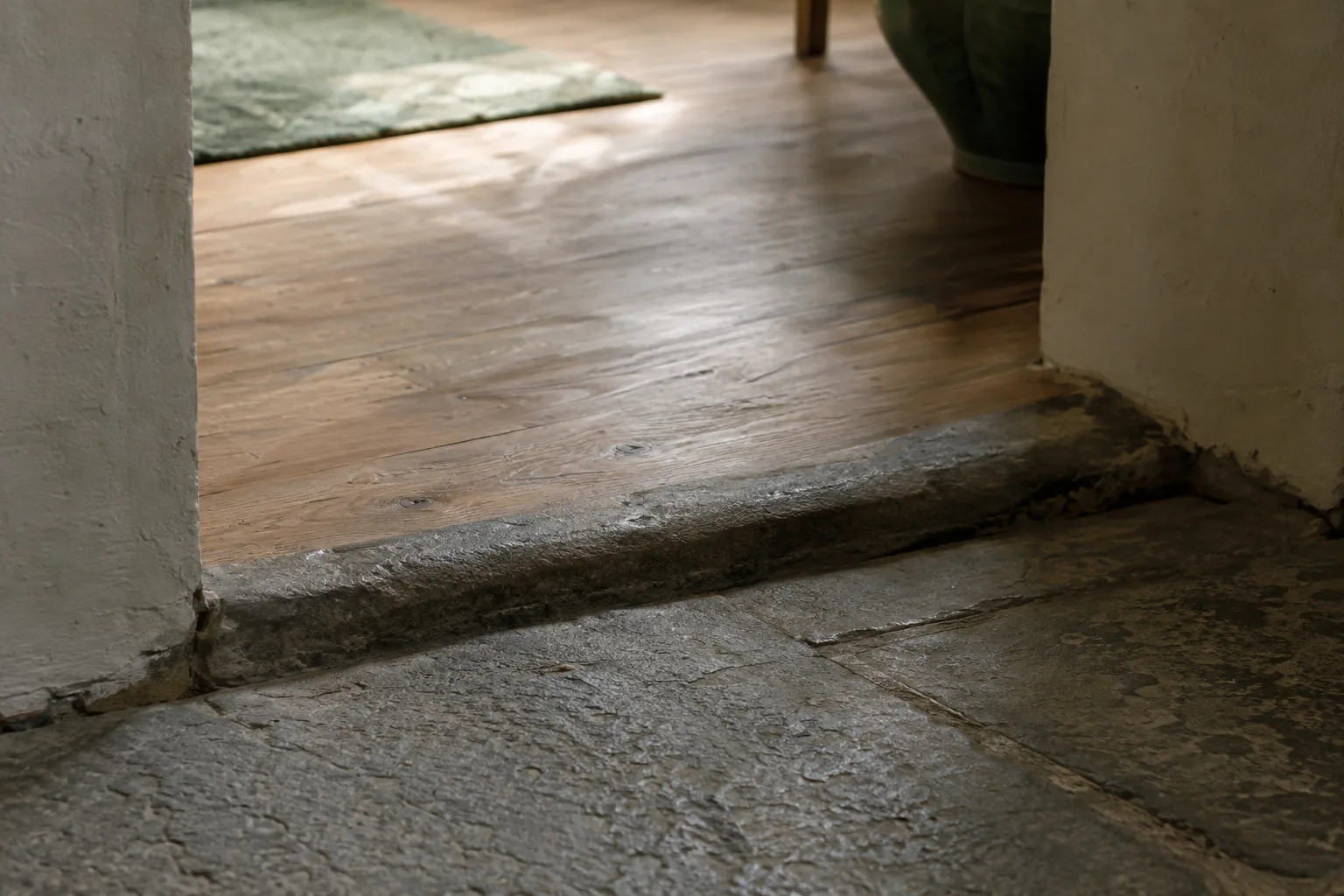
서로 다른 바닥 사이에 낮게 솟은 낡은 돌 문턱

02 / 05 Some heights only show themselves up close.

Pause on this sentence

Even an open door
could do with a note on how to come in.

A beginner needs an order to follow

To someone who knows their way around, ‘starting’ is a single action. To someone doing it for the first time, it can be a fork with several branches. What do I press, what do I need to hand, can I get back if I press the wrong thing — that is what comes to mind first.

Not everything has to be explained at once. One visible thing to do now is enough. To holding the door open, try adding a line that marks where the first step goes.

If it reads like thisStart whenever you like.

Try writing it like thisRead the first example to begin with. Nothing to prepare.

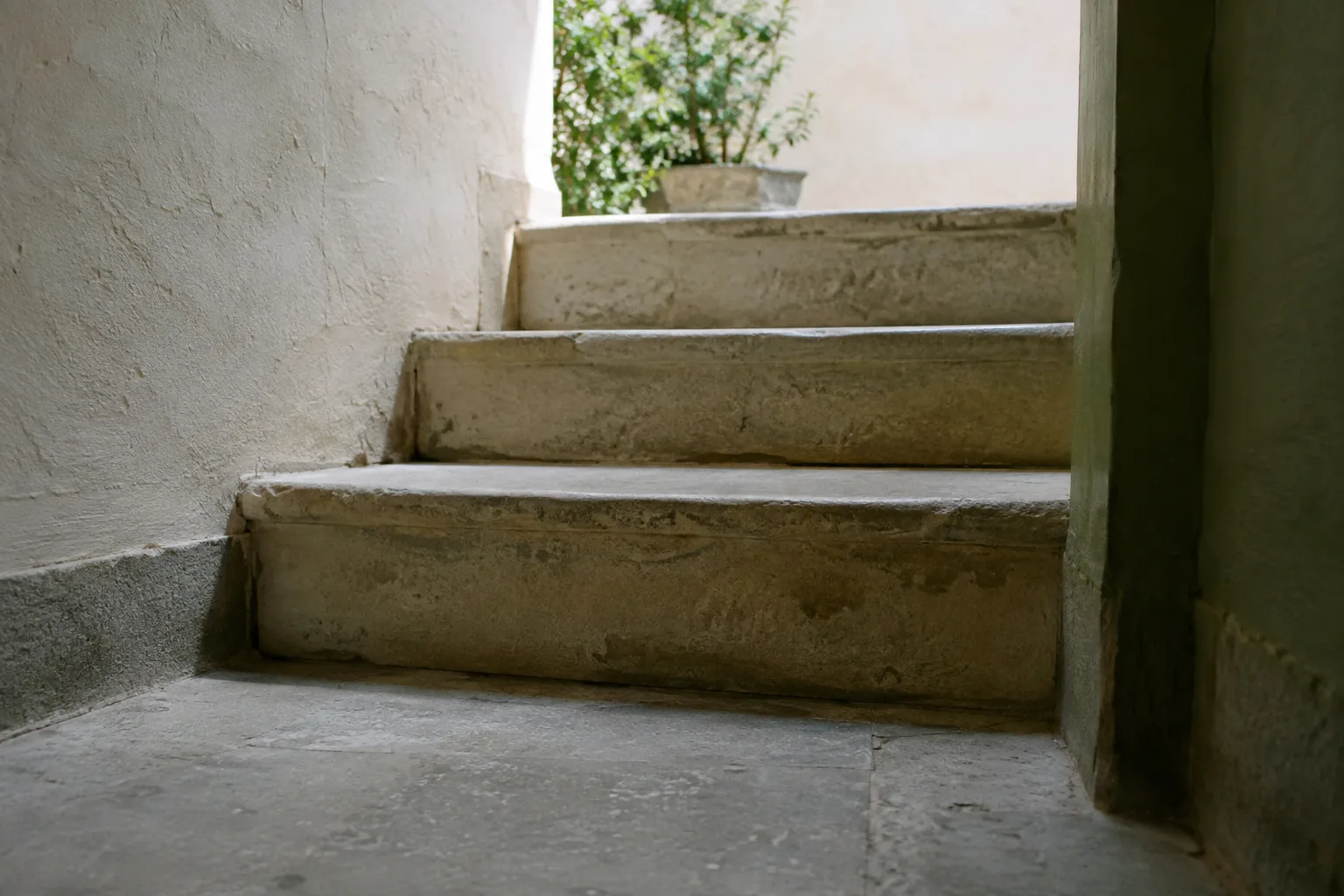
밝은 쪽으로 이어지는 낮고 닳은 돌계단 세 단

03 / 05 A start is the one step in front of you.

Put the conditions beside the word ‘anyone’

Someone with a quiet hour and someone glancing at a screen in snatches can read the same guidance quite differently. Someone meeting an unfamiliar word, someone who only has a phone — each of them needs something different explained.

Before we say anyone can do this, it is worth asking who we pictured as we wrote it. Say up front how long it takes and what is needed, and readers can choose a beginning that fits their own life.

If it reads like thisAnyone can learn this easily.

Try writing it like thisThis example reads perfectly well on a phone. It comes in three paragraphs, so one at a time is fine.

창가의 빛과 그늘에 각각 놓인 서로 다른 두 의자

04 / 05 Even one room takes the light in different ways.

Leave a note where people get stuck

You can know that a question has formed and still not know what words to put it in. To ‘do ask, any time’, try adding a small frame for getting the question started.

If people can say which part they haven’t understood yet, the learning can carry on from there. Guidance that spares a newcomer a long hesitation is worth thinking about.

If it reads like thisAsk if you don’t understand.

Try writing it like this‘I follow up to here, but I’m lost from this word on’ is a perfectly good way to begin.

창가의 나무 탁자에서 조금 빼 놓은 빈 의자

05 / 05 A small sign that you may sit here.

The question to take away today

In the explanation you handed over,
can a beginner see where the first step goes?

Think of one line of guidance you wrote recently. Add a single line more: what to do first.