The shot missed. Does AI know why?
Put a shot that went in next to one that didn't and small differences start to show. In an age when AI can pick out the movements of a body, how far should we trust what it finds? Two basketball clips, side by side, and the gap between analysis and coaching.
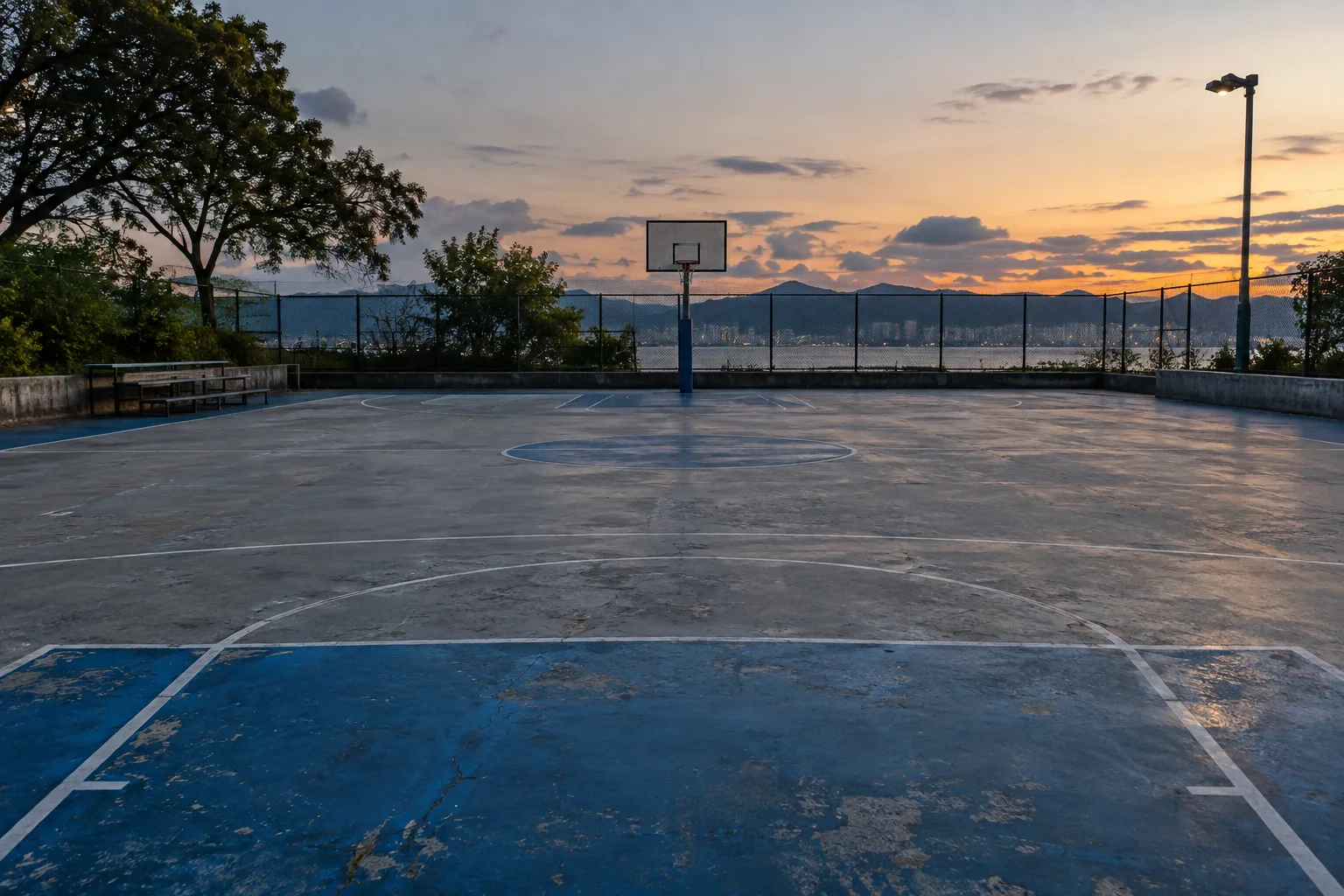
AI & SPORTS / 04
Put two clips of a jump shot side by side. One went in; one missed. In the second clip the elbow looks a little lower. And there you have a perfectly plausible explanation: the elbow dropped, so the ball didn't go in.
Add the dots and lines that AI has laid over the body and the explanation starts to look more precise still, because a difference you could only half see now has coordinates attached. But how much can those numbers actually tell you? Finding the difference between two shots and finding the reason one of them missed are not the same thing.
The technology that puts dots on a body
One of the technologies behind this kind of analysis is pose estimation. Google's MediaPipe Pose Landmarker estimates the position of 33 points on the body in a photograph or a video, shoulders, elbows and wrists among them. The name is unfamiliar, but it is easier to grasp if you picture someone watching a clip and marking the main points of the body as they go.
Overlay those coordinates on the footage and you have something a person can use to compare movements: where the arm sits as the shot is set up, and where it sits after the ball leaves the hand. The use of it is that when you talk about a movement that flashed past, you can point at the same frame instead of saying "that bit just then".
What the tool outputs, though, is the position of a body. It is not a finished coaching app that tells you the right way to shoot. What meaning to attach to the coordinates, and how to judge the movement as basketball, are questions that come afterwards.
Are the two clips really the same moment?
Back to those two shots. Before you set about fixing an elbow that looks low, there is something to check. What if the first clip catches the instant before the ball is released, while the second catches the arm still on its way up? Then you have frozen two different moments and concluded that the posture differed.
The camera needs looking at too. Were both shots filmed from the same angle? Was the arm hidden behind the torso, or behind another player? You cannot claim to have seen clearly an elbow that went out of frame. Which is why, even when AI hands you coordinates, you have to look at which part of the original footage they refer to.
And matching the filming conditions does not settle it either. The first shot may have been taken freely and the second over a defender. The distance may have been different. One may be a movement the player knows well, the other an attempt at something newly learned. Strip all that out and compare nothing but the elbow, and the explanation arrives far too quickly.
What the footage can't tell you, the player can
So when you sit down to watch practice footage together, you need more than the numbers on screen; you need the player's account of it. Ask "what were you trying to change on the second one?" and two shots that looked alike may turn out to have been two different attempts.
None of this is to say that AI analysis is useless. It is to say: let it help you work out what to look at again, but don't treat every difference it surfaces as a fault to be corrected on the spot. If you do decide to change something in the technique, that decision belongs alongside the filming conditions, the purpose of the session and the coach's own eye.
Next time I watch footage of a shot, I want to start by matching the points AI has marked against the original. Then I want to ask the player what they were trying to do at that moment. Until I have heard the answer, an elbow that looks low is better left as "something to look at again" than filed away as "a problem to fix".
Source: Google AI Edge · Pose landmark detection guide · accessed 22 September 2026
The two shots are a hypothetical example, used for illustration.