Before the AI answers, the time we give a child to speak
Setting the child's own words a little ahead of our wish to hand them an answer. A letter to the grown-ups of four- to six-year-olds—on looking, listening and topping up only as much as is needed, in front of unfinished blocks and a short pencil line.
To
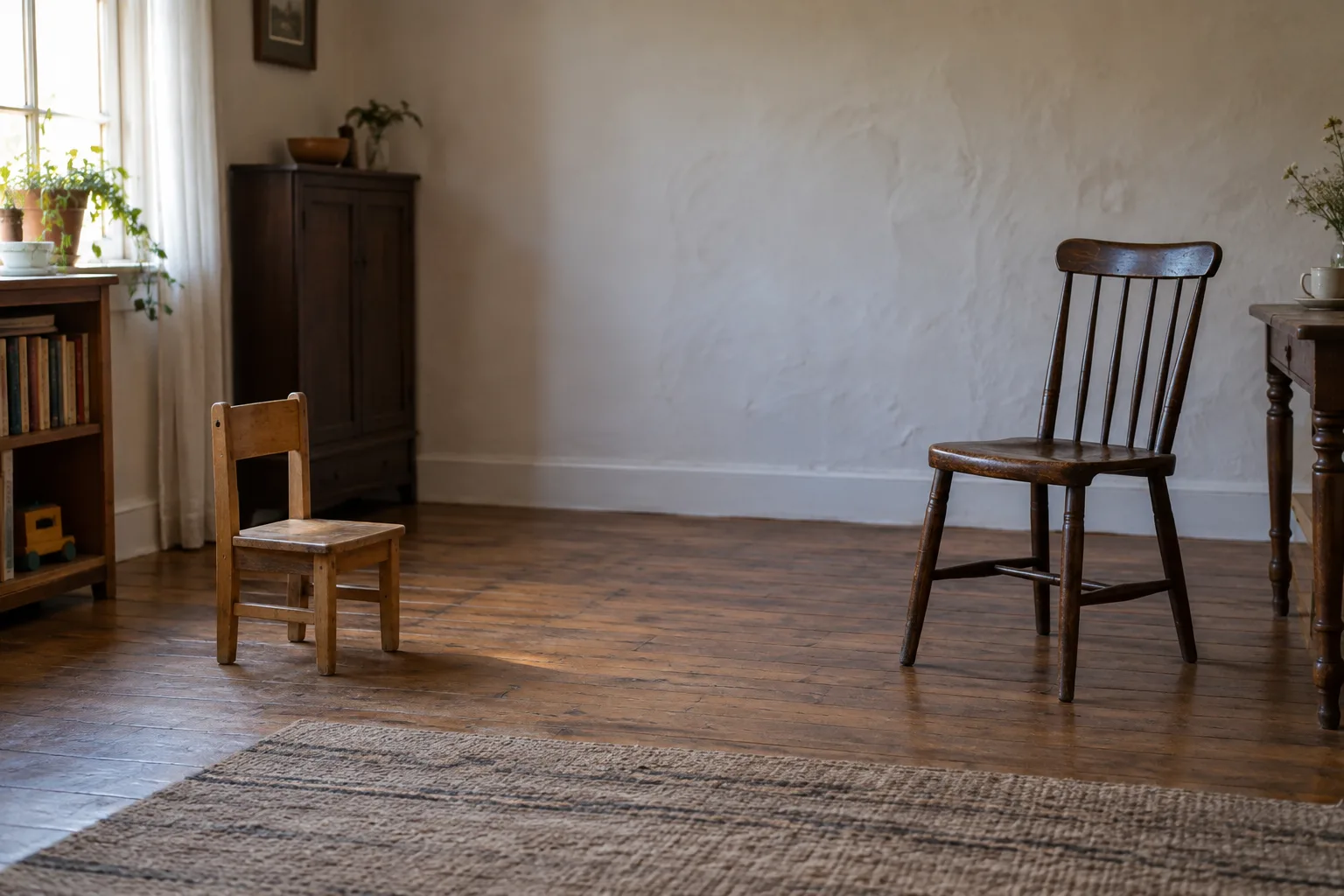
The grown-up sitting beside the small chair
A child lays down three blocks and says, “This is a bridge.” To adult eyes there is no way across. Picture yourself lowering, just for a moment, the hand that was reaching for a picture to show them. This is not an observed scene but an imagined bit of play, made for this letter.
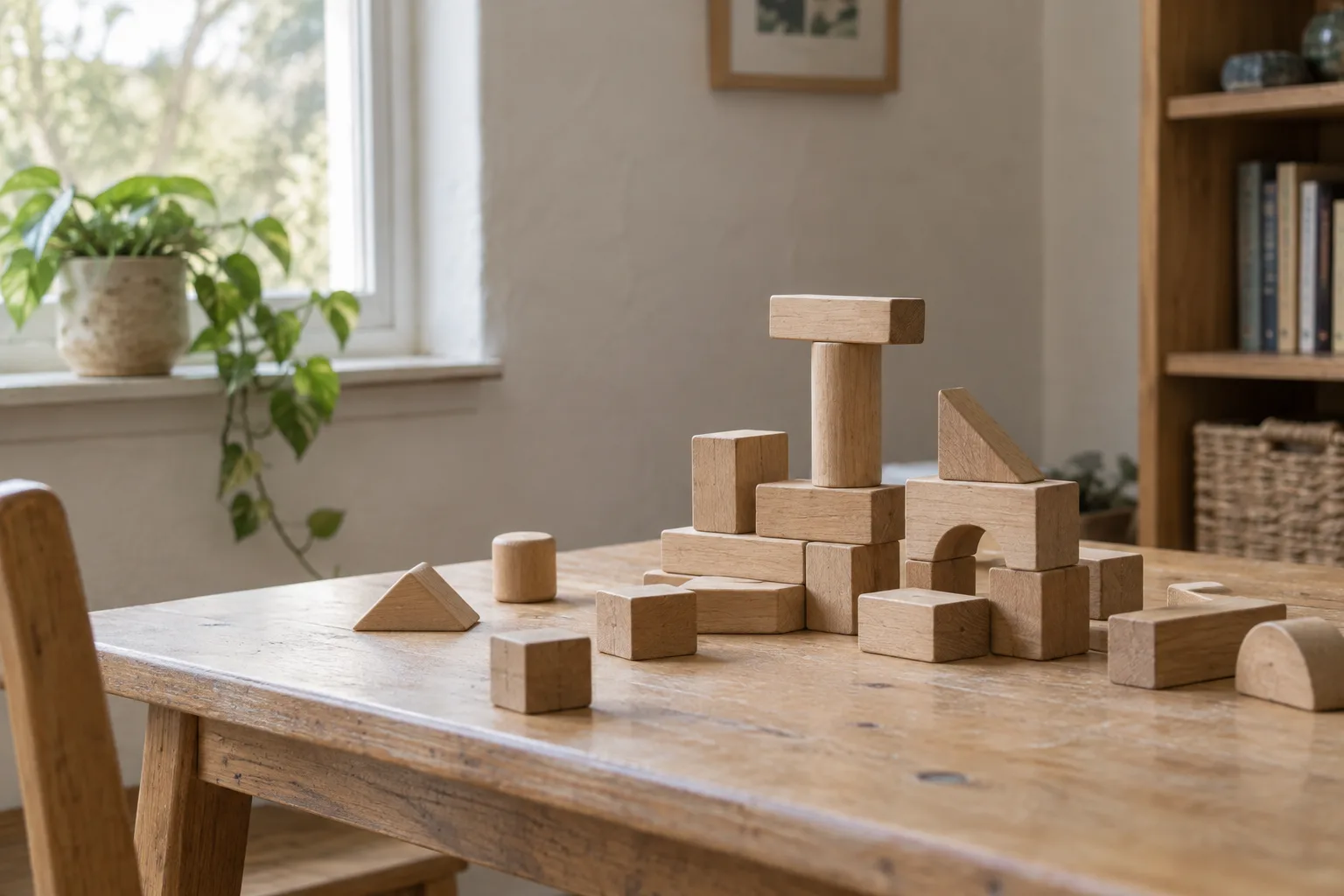
02 / 05 · An unfinished block shape on a wooden table
The first pause
Before naming it, ask what they saw
“Where does it cross to from here?” If the child pats the bare floor, then the imaginary river is right there. Try checking the meaning first: “Ah, it's a path that joins these two sides.” You can keep the play's imagining separate from how a real bridge is built and still let the adult's explanation come a little later.

03 / 05 · A short pencil line on paper
The second pause
A line will do, if words won't come
When the words don't arrive, open another route. “Do you want to point? You can draw it, and you don't have to say anything right now.” Let's agree not to turn waiting into a rule counted in seconds, or a test to extract an answer. You can look at one line on the paper together and then move on to another game.
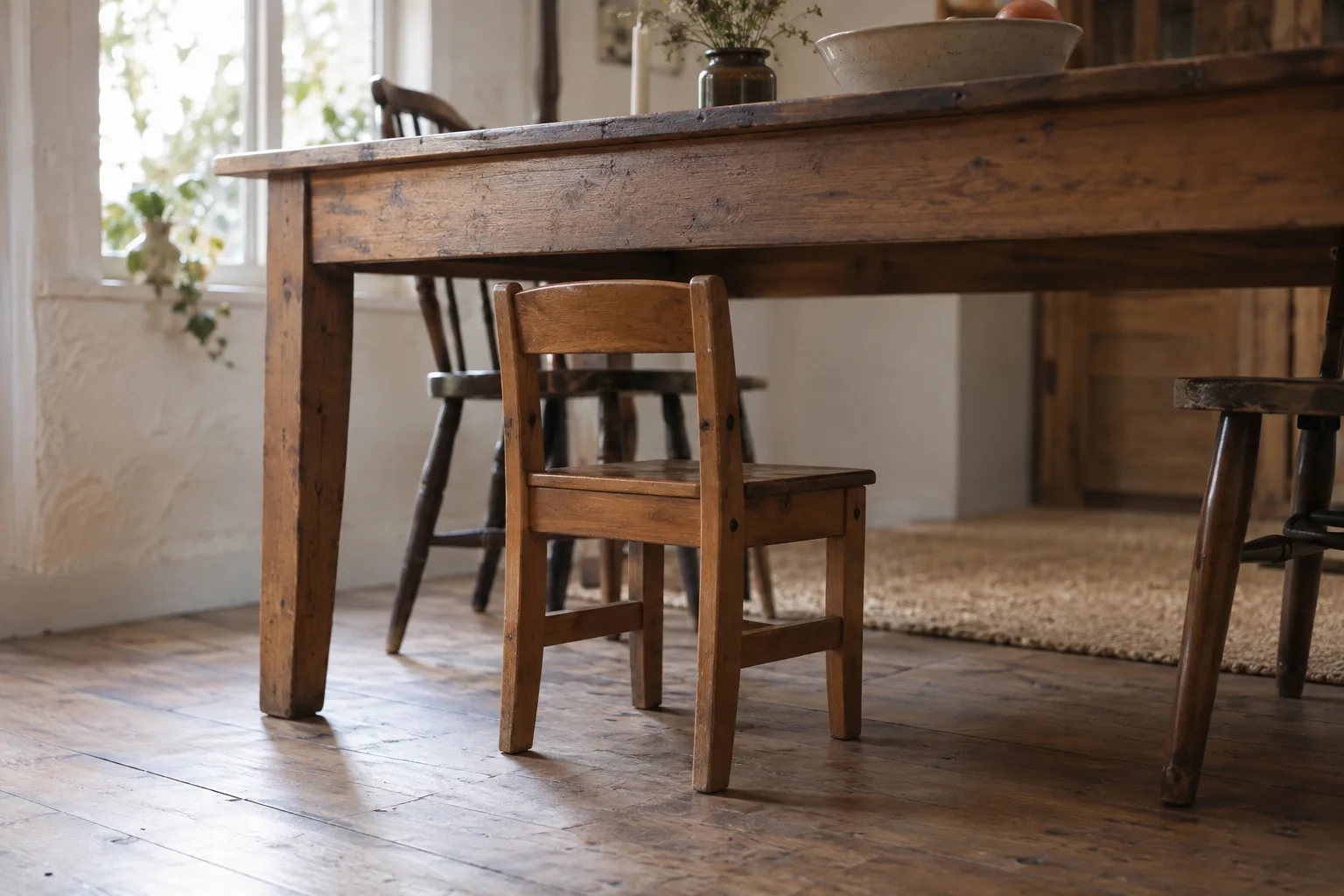
04 / 05 · A small chair under an adult-sized table
The third pause
The hand that switches on the AI is the grown-up's
If a question is still hanging in the air, the adult goes off, looks it up and comes back. If you consult an AI, check it against a reliable source and then explain only as much as is needed. Whatever you couldn't confirm, leave it as “I'll need to look into that some more.” This activity requires no direct use of AI by the child, and no uploading of their photographs or personal details.

05 / 05 · A small chair and a large chair side by side at the window
Postscript
A sentence to leave between the two empty seats
This is not a method that promises anything for development or learning; it is a suggestion for conversation, offered to the grown-ups of four- to six-year-olds. Every child talks and plays differently, and if yours wants an explanation, by all means give one.
“This is what I heard—is that what you meant?” Whether the answer is yes or no, the next word belongs to the child. If you find yourself beside the small chair today, why not leave one space where the child gets to do the naming first.
Today, before I explain anything, could I ask first what the child saw?
20 September 2026 · On the Threshold of Learning 02 / 43
Text: AI-written first draft · Images: AI-generated