Before you tell them the name of the leaf
When a child holds out a leaf, the first instinct is to go looking for its name. What if you set a photograph and the real leaf side by side, and gave the child time to look, touch and talk first? A short piece for the grown-ups of four- to six-year-olds.

LEARNING / 06
A child holds out a leaf picked up along the way. “What's this?” Before reaching for the phone to look up its name, take a photograph of that very leaf. Set the real leaf and the picture side by side, and see what comes of it. What follows is an imagined scene: a four- to six-year-old and a grown-up looking together.
Enlarged on the screen
Zoom in, and fine lines appear running across the leaf.
“There are lots of roads here.”
Rather than supplying the word “veins” on the spot, the grown-up looks where the child is pointing. “Where do they start, and where do they go?” A small finger travels from the middle of the screen out to the edge. A photograph is a convenient way to peer at a small detail together. But however far you enlarge it, what the fingertip meets is smooth glass.

Turned over and touched
Now turn the real leaf over. A clean one, chosen by the grown-up as safe to handle. The child moves a fingertip slowly across it, then says:
“This side, the lines stick out.”
Front, back, front again. The lightness of the leaf resting in a palm is one more thing to say alongside the photograph. Not that a hand can tell you what it actually weighs. For now, the work is putting a noticed difference into words.
Another leaf, laid alongside
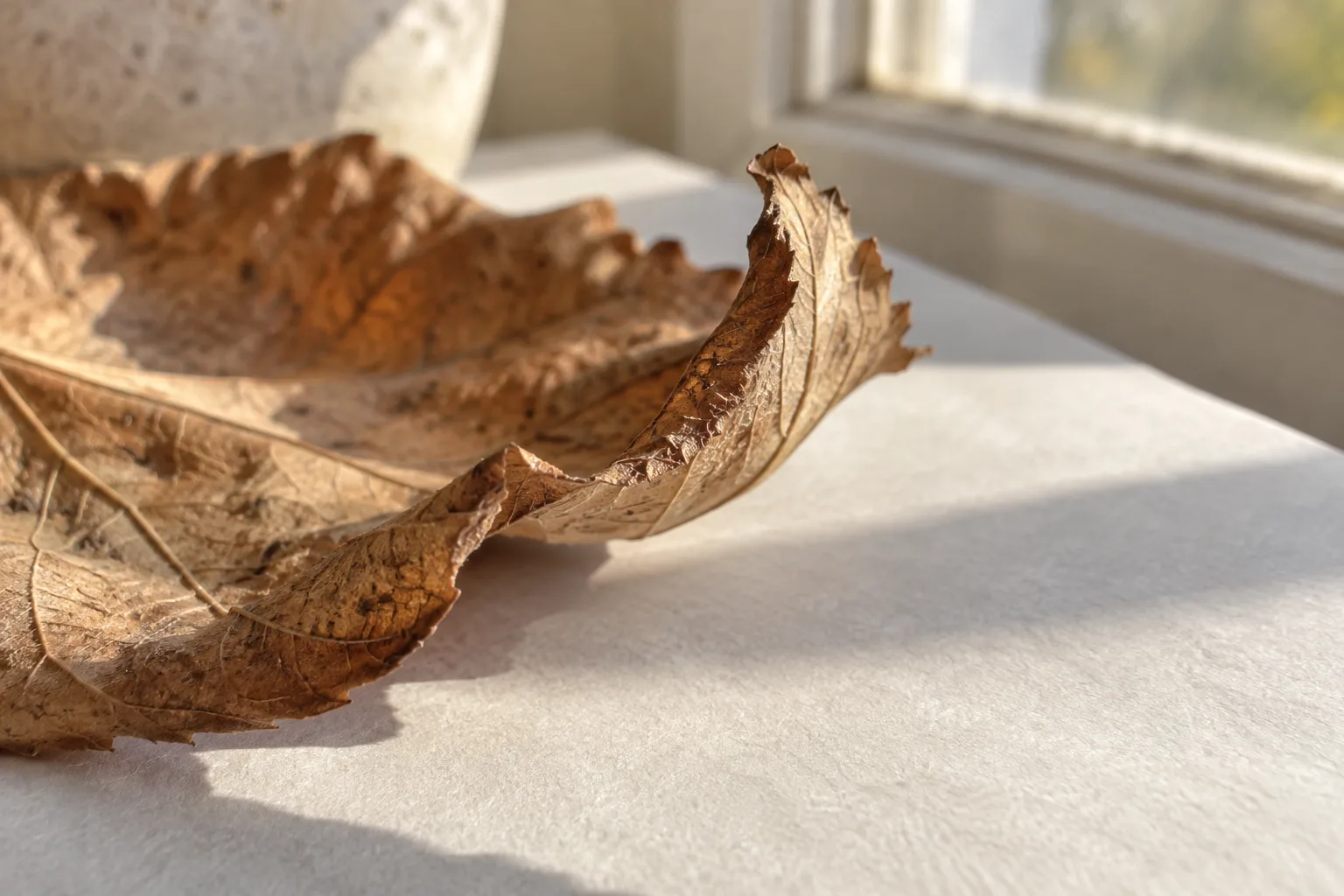
Put down a second leaf, brown and crumpled. The child looks at the two of them and says, “This one's like paper.”
“What about it is like paper?”
It might be the dry edge. It might be the sound it made when it shifted. Rather than picking the answer, the grown-up listens to the child's explanation. And if the child would rather not touch, there is no need to press. Differences found by eye are worth talking about too.
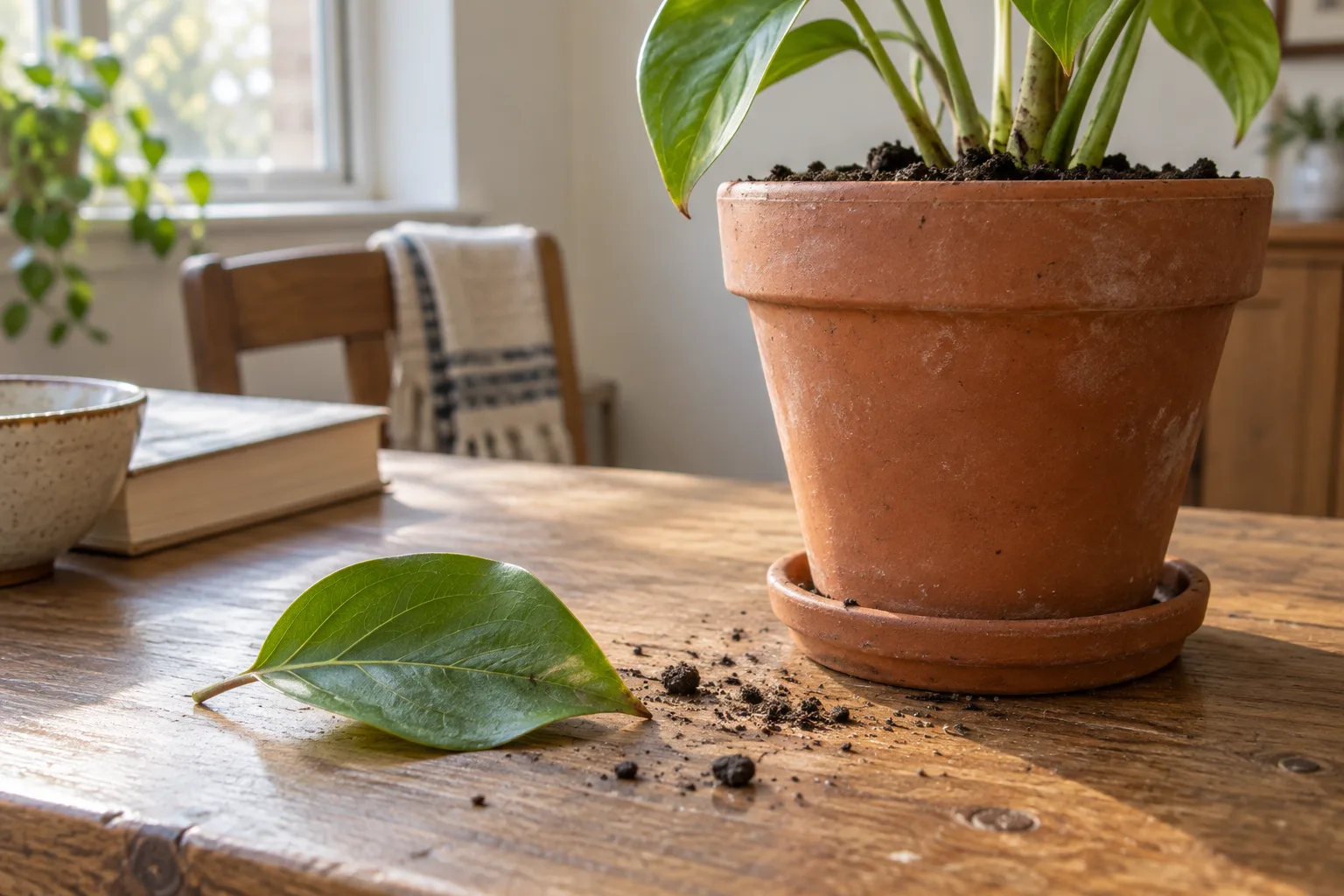

When the name does get looked up later, there is now something to match it against. The search, or the explanation the grown-up had ready, can be added then. Today's record needs no list of correct answers — one line of what the child said will do. ‘The lines on the back touched my hand.’ A feeling the photograph did not keep, kept instead in the child's own words.
The exchange between grown-up and child is an imagined scene, offered to suggest an activity. It is not a documented case of measured learning outcomes.